Biochar Plant Manufacturers in India – 2026
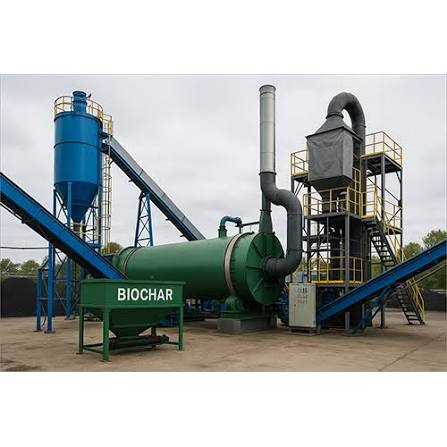


Equicor Technologies Private Limited is well-known Biochar Plant Manufacturers in India, Suppliers and Exporters in India. We Designed with cutting-edge biomass pyrolysis technology, intelligent process automation, high-efficiency thermal systems, and optimized biomass handling mechanisms. Our Biochar Plants are engineered to deliver advanced biomass pyrolysis solutions, focusing on efficient and effective biochar production, renewable energy generation, carbon sequestration, waste valorization, and long-term industrial reliability. Our solutions enable industries to produce in sustainable ways, more effectively use resources and operate more efficiently for the long term.
Biochar Plant Suppliers and Exporters in India
With industries and agriculture, we turning towards sustainable waste management and carbon reduction. As we are Biochar Plant Suppliers in India, our Biochar Plants have now become the most effective way to turn agricultural residues, forestry waste and organic biomass into valuable biochar. We not only help to reduce waste disposal problems, but also produces a valuable carbon-rich product that can improve soil quality, contribute to carbon capture, and advance circular economy.
What is Biochar Plant and Where it is Applicable?
Biomass Biochar Plant is an industrial pyrolysis system that is designed to pyrolyze agricultural waste, forestry residues, wood chips, coconut shells, rice husk, bagasse, bamboo, sawdust and other biomass materials under oxygen-limited conditions to produce biochar.
Pyrolysis is a process in which biomass is heated at specific temperatures without a complete combustion. This leads to high quality biochar, combustible gases and bio-oil that can be collected and used for energy production. This biochar is used in many different sectors including in agriculture, water filtration, environmental remediation, carbon sequestration, livestock farming and for industry.
How Our Biochar Plant is Work?
Controlled pyrolysis is the principle behind the operation of a Biochar Plant, which involves heating organic biomass in an environment with limited oxygen to create biochar. An automatic feeding system is used to deliver biomass to the pyrolysis reactor. The biomass is subjected to controlled heating inside the reactor, which results in the generation of biochar, combustible syngas and bio-oil.
The gases produced are captured and can be used as an additional fuel source within the plant, thus enhancing the energy efficiency within the plant. As Biochar Plant Manufacturers in India, Biomass Biochar Plant is cooled by special biochar discharge systems and before storage, and emission control units eliminate particulate matter and pollutants from exhaust gases.
Why Indian Industries Need Biochar Plants?
- Efficient Biomass Waste Management – Converts agricultural and industrial biomass waste into valuable biochar instead of open burning or landfill disposal.
- Supports Carbon Reduction Goals – Helps industries reduce carbon emissions through long - term carbon sequestration and sustainable production.
- Renewable Energy Generation – Produces syngas and bio - oil during pyrolysis, improving overall energy efficiency.
- Compliance with Environmental Regulations – Assists industries in meeting pollution control norms and sustainability standards.
Industries use which type of Biochar Plants?
As one of the top Industrial Biochar Plant Manufacturers in India, we produce the latest generation of Biochar Plant such as
- Continuous Biochar Plant - The Continuous Biochar Plant is a continuous plant that allows for continuous biomass feeding and continuous biochar production, thus suitable for large-scale industrial use. These systems provide increased productivity, reduced labour requirements and product quality.
- Batch Type Biochar Plant - The Batch Biochar Plants are suitable for small to medium scale production capacities as they can process biomass in individual production cycles. They are flexible to operate and can be used for various research labs and special applications.
- Rotary Kiln Biochar Plant - Rotary Kiln Biochar Plants are based on rotating cylinders, which provide even heat distribution and efficient carbonization of biomass. The plants are used extensively for processing a variety of biomass materials of uniform quality.
- Energy and Water Conservation System - A Screw Reactor Plant uses the controlled screw conveyors to carry the biomass feed through the heated chambers providing the control of residence time, uniform heating and high conversion efficiency.
- Fully Automatic Biochar Plant - The plants adopt PLC automation, touch screen HMI, automatic feeding, temperature control, and intelligent process monitoring to achieve high productivity and low manpower.
- Custom Engineered Biochar Plant - Biochar plants are engineered, customized based on biomass properties, production capacity, process requirement etc. and based on automation and customer specific operational requirement.
The Industrial Proof Block – Performance Validation and Environmental Testing
As Pyrolysis Biochar Plant Suppliers in India, Operational evaluation of Biochar Plant performance is carried out to validate the performance under continuous industrial production condition.
- Testing Timeline: - 90–180 operational days
- Environmental Conditions: Operational conditions of continuous biomass feeding, moisture content variations, ambient temperature variations, high-temperature pyrolysis and long-term industrial operation.
- Evaluation Parameters:
- Biochar production efficiency
- Biomass conversion rate
- Carbon retention performance
- Energy recovery efficiency
- Fuel consumption
- Reviewer Background: Renewable energy engineers, biomass processing experts, agricultural technology specialists, environmental consultants and industrial process engineers.
Technical Specification of Biochar Plant:
As Biochar Plant Exporters in India, we have added below a technical sheet that provides more technical information such as:
| Technical Parameters | Batch Type Biochar Plant | Continuous Biochar Plant | Rotary Kiln Biochar Plant | Screw Reactor Biochar Plant |
|---|---|---|---|---|
| Production Capacity | 500 kg to 2 Tons / Day | 5 Tons to 30+ Tons / Day | 3 Tons to 20 Tons / Day | 2 Tons to 15 Tons / Day |
| Operating Temperature | 350°C – 550°C | 450°C – 750°C | 400°C – 700°C | 400°C – 600°C |
| Feedstock Moisture Tolerance | Up to 15% (Optimized) | Up to 20% (Integrated Pre-drying) | Up to 25% | Up to 12% (Requires uniform sizing) |
| Carbon Retention Efficiency | 75% – 85% | 88% – 95% | 85% – 92% | 87% – 94% |
What are the Modern Biochar Plant features that make them more efficient?
As we are supplier trusted Biochar Plant in India, our systems include features such as:
- High Biomass Conversion Efficiency - Through optimization of the reactor design, maximum production of high-quality biochar from biomass and minimization of energy losses are achieved.
- Intelligent PLC Automation - Modern Biochar Plants are equipped with PLC controls, touchscreen HMI, remote monitoring, automated safety features and real-time production analytics.
- Advanced Temperature Control - Stable process and high quality biochar produced with precise temperature control throughout the pyrolysis process.
- Energy Efficient Operation - Biochar Production Plant is used as a fuel which decreases fuel demands and fuel cost.
- Low Emission Technology - High level emission control systems help industries meet the requirements of environment law by reducing PM, smoke and harmful gases.
What are the applications of Biochar Plant?
Being one of the leading Biochar Plant Manufacturers in India, our plants are extensively used in various industries and sectors.
- Agriculture - as Carbonization Plant Manufacturers, it Makes quality biochar that increases soil fertility, water holding capacity, crop yield and sustainable farming.
- Biomass Processing Industries - Biochar Reactor Plant Reduces problems of waste disposal while producing valuable carbon-rich biochar from agricultural and forestry waste.
- Renewable Energy Plants - Small Scale Biochar Plant Produces combustible syngas and as Organic Biochar Plant Suppliers for enhanced energy recovery and sustainable energy production.
- Forestry Operations - Biochar Manufacturing Equipment Converts wood wastes, branches, bark and sawmill residue into marketable biochar products.
- Waste Management Facilities - Biochar Production Equipment and Renewable Energy Biochar Plant Converts organic biomass wastes into reusable products, reduces landfill disposal and emission of GHGs.
- Water Treatment Industry - Gets Green Energy Biochar Plant, Biochar Plant Installation of activated biochar materials for water purification and contaminant adsorption application.
Industrial Case Study | Smart Biochar Plant Integration for Circular Economy and Carbon Reduction
- Industry Segment - Renewable Energy, Agriculture, Biomass Processing and Waste Management, Environmental Sustainability.
- Global Market Trend - Carbon sequestration, biomass valorisation, renewable energy production, waste-to-value technologies and Industry 4.0 automatization.
- Challenge - Cost of biomass disposal, greenhouse gas, unproductive use of resource and need for sustainable carbon management solutions were rising especially for industries.
- Implemented Technology Upgrade - Installation of a next generation Biochar Plant combining PLC automation, intelligent biomass feeding, advanced pyrolysis control, emission treatment system, syngas energy recovery and digital process monitoring.
Implementation Timeline
- Phase 1 - involves conducting a biomass assessment and feasibility study of the process (30 Days).
- Phase 2 – Engineering design, fabrication and installation (60 Days)
- Phase 3 – commissioning, optimization and production validation (90 Days)
Operating Conditions - Continuous biomass processing under varying feedstock types, moisture levels, ambient temperatures, and industrial operating conditions.
Measured Performance Outcomes
- Higher biochar production efficiency
- Improved biomass utilization
- Reduced greenhouse gas emissions
- Enhanced carbon sequestration
- Lower operating costs through energy recovery
Technological Significance - This industrial implementation reflects the growing transition toward advanced biomass pyrolysis technologies, intelligent carbon management systems, renewable energy integration, and sustainable Biochar Plant solutions that support future-ready industrial operations.
Why Choose Equicor Technologies?
Equicor Technologies Private Limited is trusted Biochar Plant Manufacturers in India, Suppliers and Exporters in India. We offering advanced biomass conversion systems designed for efficient biochar production, renewable energy recovery, waste utilization, and sustainable carbon sequestration. Our Biochar Plants combine innovative pyrolysis technology, intelligent automation, energy-efficient operation, and robust engineering to help industries transform biomass waste into valuable resources while supporting environmental sustainability and long-term operational excellence. Contact us.
FAQ's
Biochar Plant converts biomass waste into high-quality biochar through pyrolysis, enabling sustainable waste management, renewable energy recovery, and long-term carbon sequestration.
Biochar Plants can process rice husk, bagasse, sawdust, wood chips, bamboo, coconut shells, crop residues, forestry waste, peanut shells, sugarcane waste, and many other agricultural biomass materials.
Yes. Modern Biochar Plants feature PLC-based automation, automated feeding systems, intelligent temperature control, real-time monitoring, and predictive maintenance for efficient and reliable operation.
Biochar Plants are widely used in agriculture, biomass processing, renewable energy, forestry, waste management, environmental remediation, water treatment, livestock farming, carbon credit projects, and research institutions.
Biochar improves soil fertility, enhances water retention, increases crop productivity, captures carbon for long-term storage, reduces greenhouse gas emissions, supports waste recycling, and contributes to sustainable agricultural and industrial practices.